There is something undeniably magical about old mountain homes. With their heavy stone bases and timber tops, they look like they’ve grown right out of the landscape. But let’s be honest: while the upstairs living quarters might be charming, the downstairs—built initially for goats and cattle—is usually dark, damp, and cold.
Turning this “stable” level into a cosy living space is a brilliant way to double your square footage. However, you can’t simply pour concrete and hope for the best. These old buildings need to breathe.
Here is how to tackle the transformation properly, keeping your feet warm and the old walls happy.
Step 1: Managing the Mountain (The French Drain)
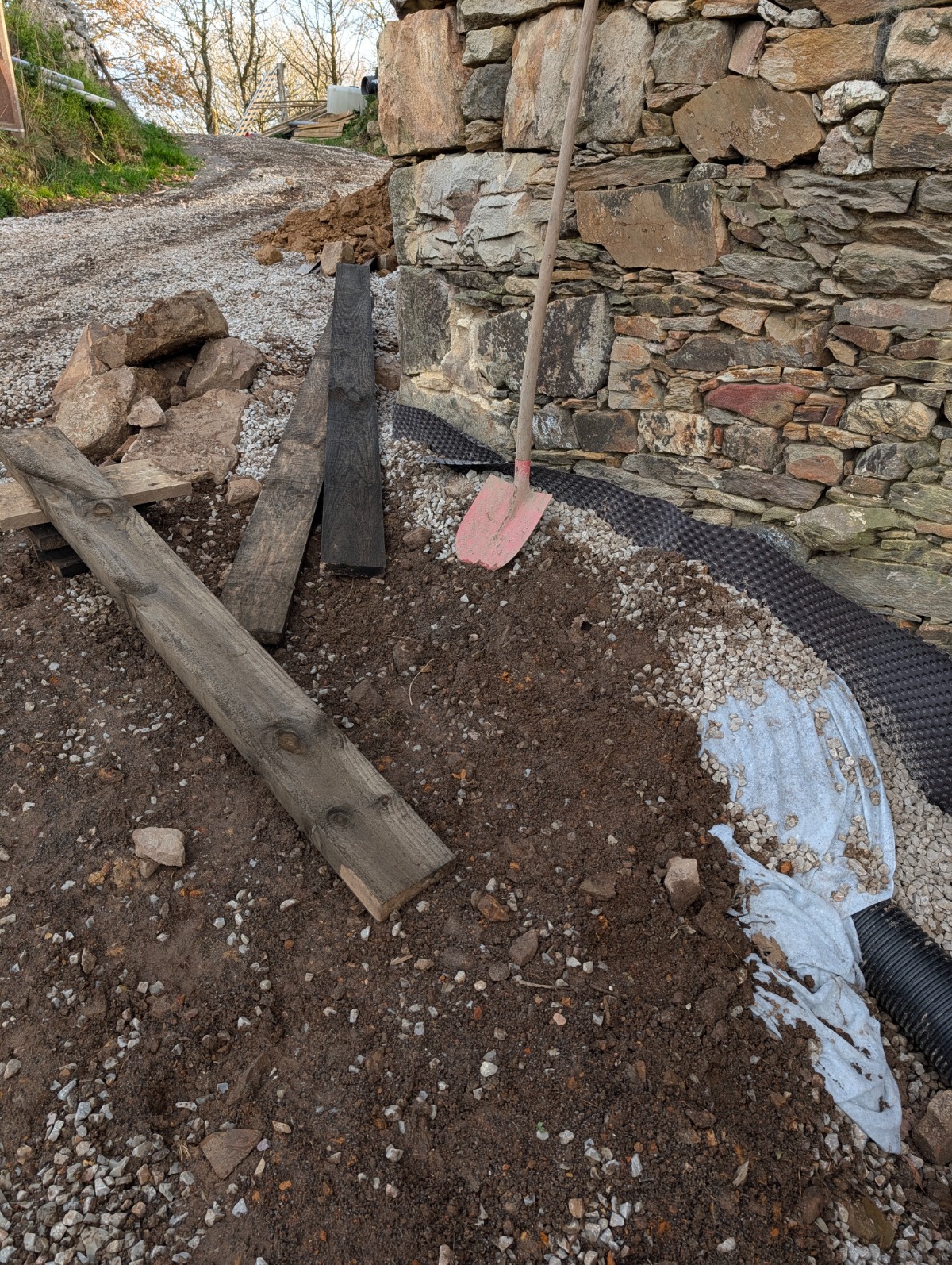
Stop and look outside before you start on the interior. Because these houses are dug into the hill, rainwater flows down and pools heavily against the back wall. If you don’t manage this water from the outside, you will lose the war against damp. Take the time to study exactly where the water flows and why. You need a two-part drainage solution: one system for the saturated land leading up to the house, and another for the wall itself. Finally, ensure every entrance is protected by its own drain.
The solution is a French Drain.
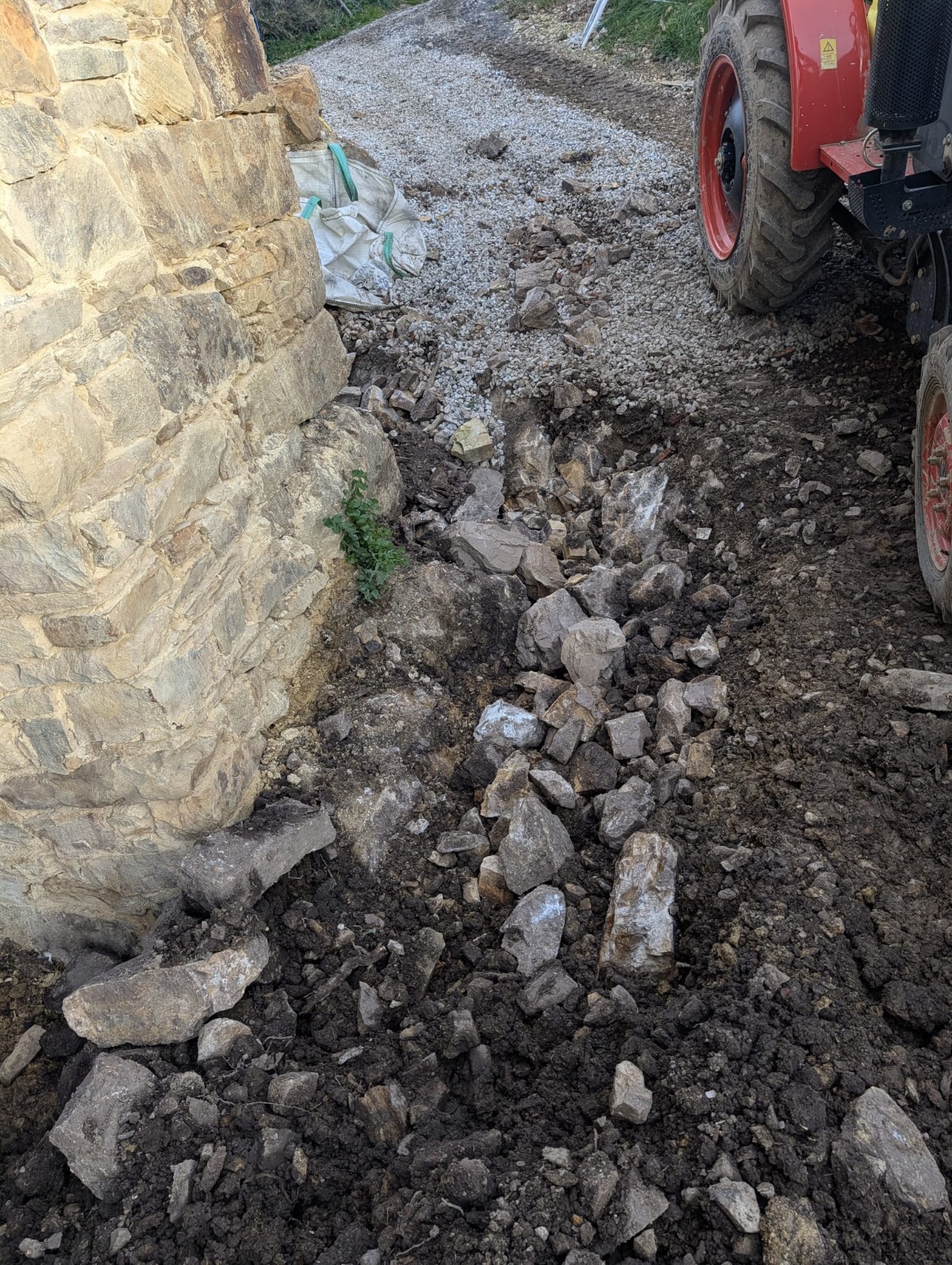
Think of this as a hidden moat. We dig a trench along the exterior wall on the uphill side, slightly deeper than the internal floor level. We line it with fabric, pop in a perforated pipe, and fill it with clean gravel. Now, when water runs down the hill, it hits the gravel, drops into the pipe, and is whisked safely away from your house before it can soak into the stonework.
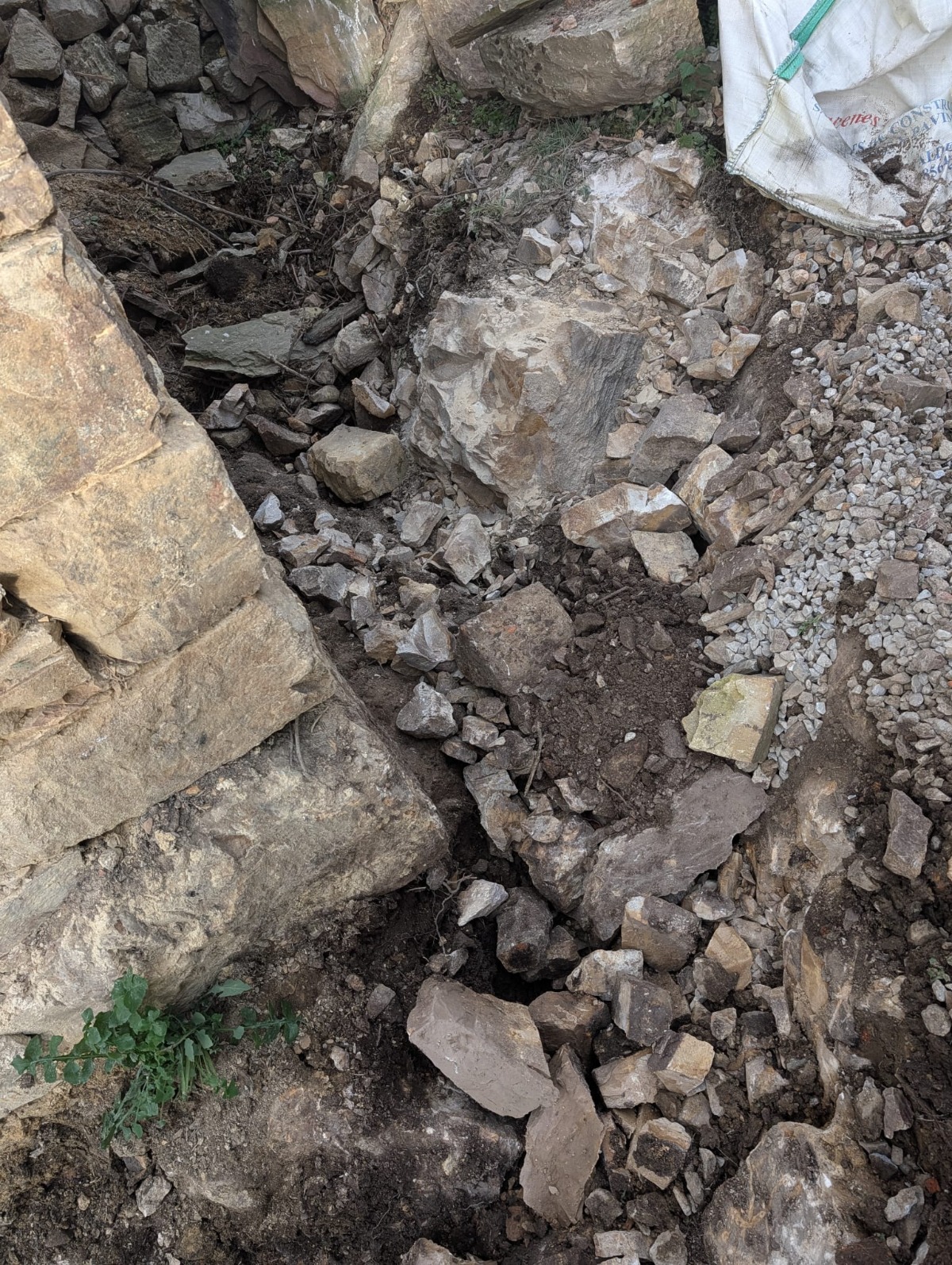
One of the most common pitfalls we see involves the installation of French drains on properties with bedrock. On paper, it seems simple: dig a trench, lay a pipe, and fill it with gravel. However, reality is rarely that straightforward.
Many older, well-built homes were separated from the hillside, but some back directly onto solid rock. When you start excavation here, you aren’t just moving dirt; you are likely hammering away at the very shelf your house sits on. This is where things can go wrong for the DIY enthusiast.
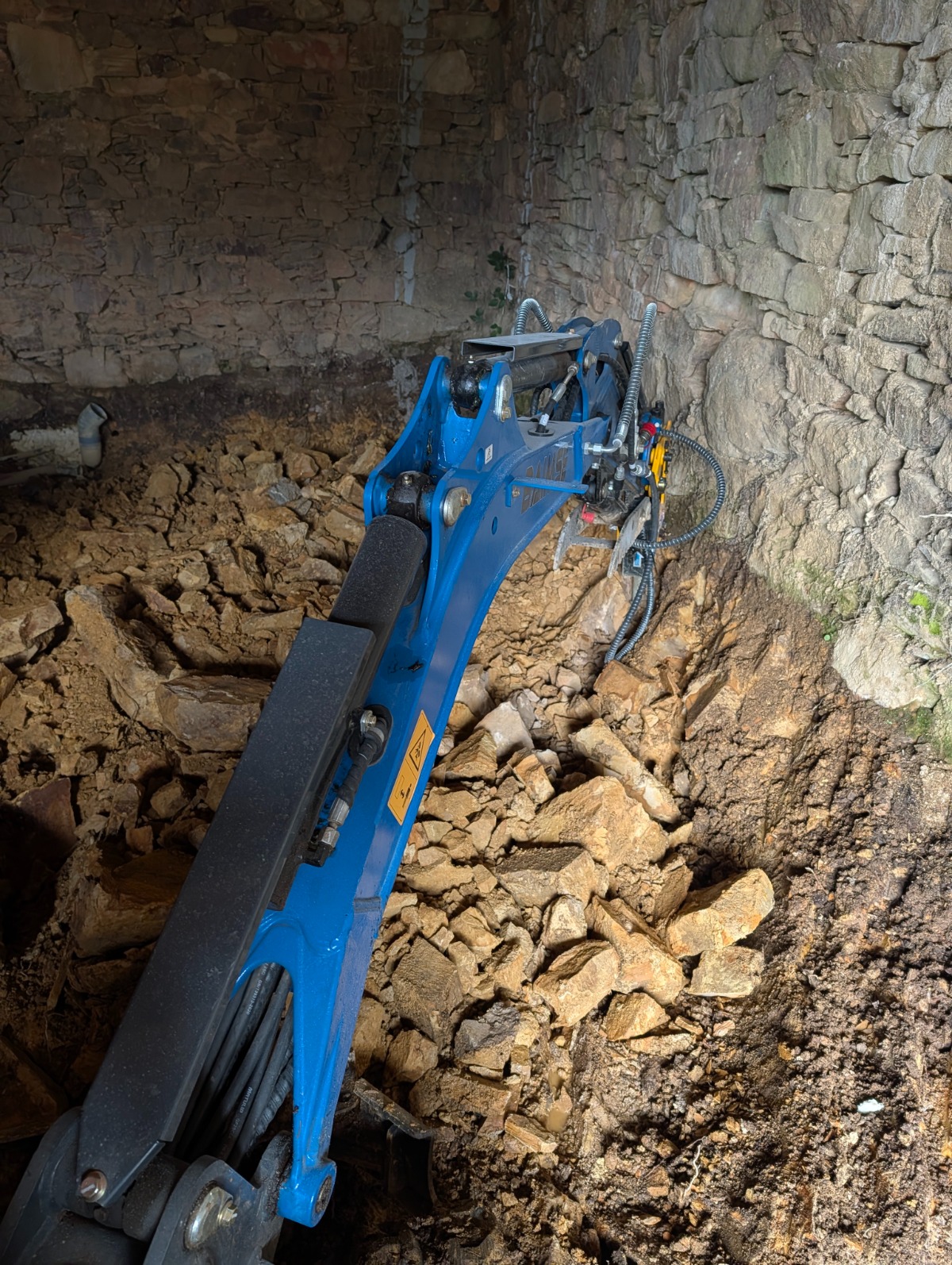
If the rock is hard—which it often is in many regions—it requires heavy breaking machinery. Used incorrectly, this machinery sends shockwaves through the ground that can crack your home’s masonry. Furthermore, digging too close to the footings can remove the lateral support the house relies on, risking destabilisation.
The golden rule? If you hit rock, stop. This work requires experts who can identify the specific depth of water ingress and carefully trench a section to drain it, all while protecting the structural integrity of your home.
Step 2: The Floor Sandwich (Radon & Limecrete)
Now that the walls are safe from the outside, we move inside. Standard cement is too rigid and waterproof for old stone; it traps moisture and pushes it up the walls. Instead, we use Limecrete—a traditional, breathable alternative.
Here is the step-by-step “sandwich” to get it right:
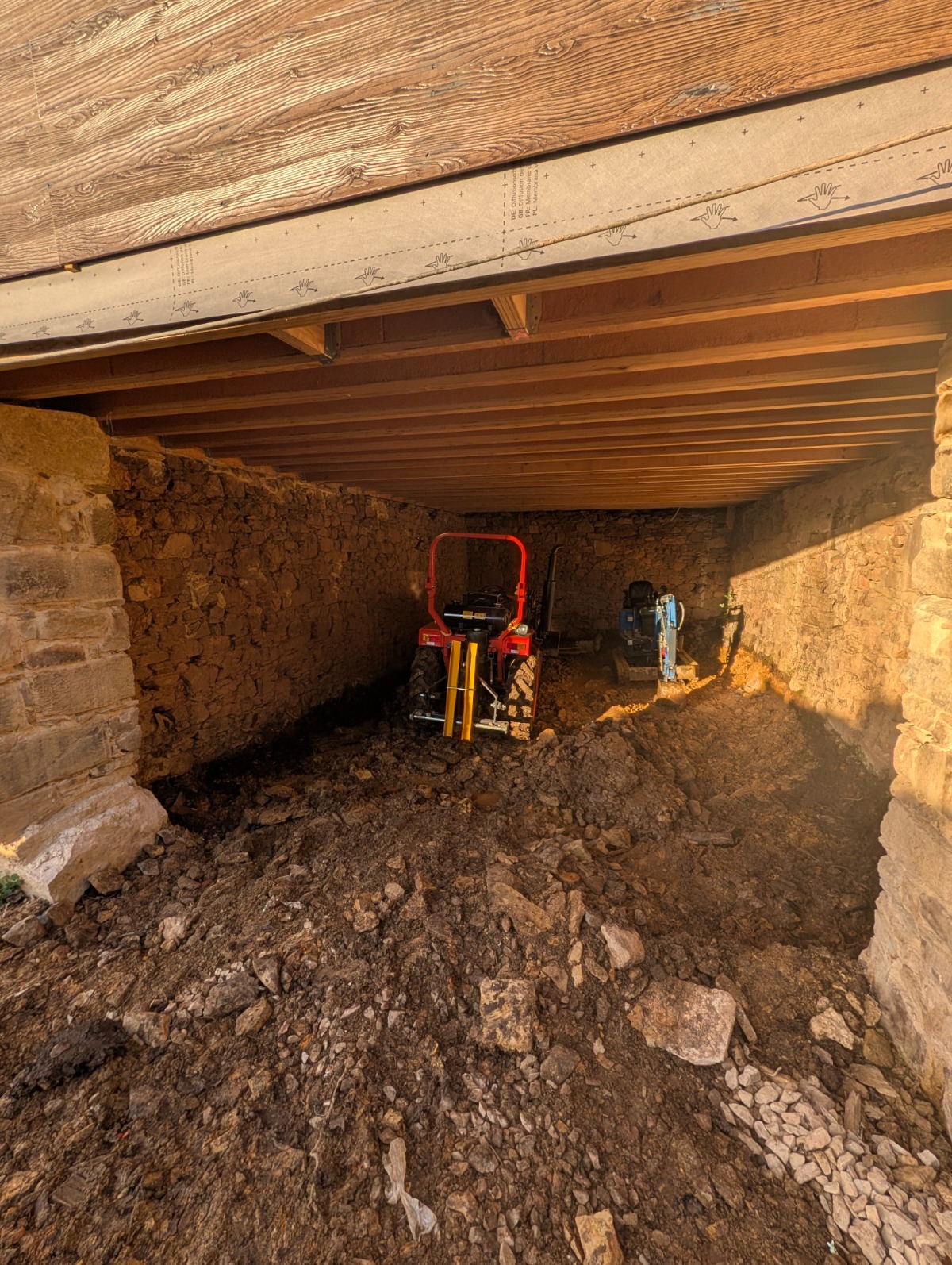
1. The Dig Out First, we carefully excavate the old earth floor. We have to be gentle here—digging too deep too fast can unsettle the foundations, so it’s often done by hand or with small machinery. This has to be done very carefully, with a clear understanding of what you are removing.
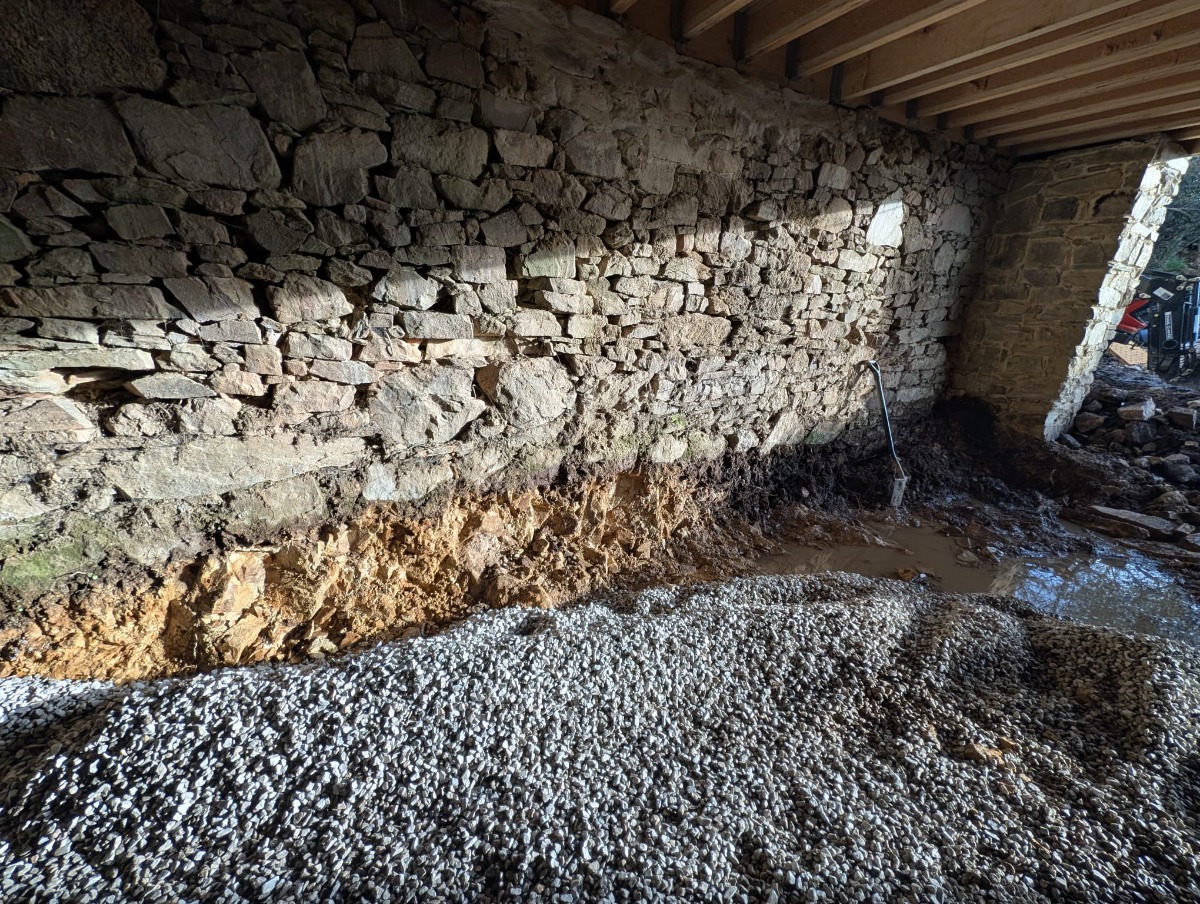
2. The Radon Defence In granite mountain regions, Radon gas is a genuine concern. To stay safe, we lay a network of perforated pipes in a layer of clean stone at the bottom of the dugout. These pipes collect the gas and funnel it to a ‘sump’ (a collection point), where it is safely vented outside.
3. The Seal & Warmth Next comes the technical bit. We lay a heavy-duty membrane to stop damp and gas rising. On top of that goes the insulation. We steer clear of standard plastic foam here; instead, we use breathable materials like compressed cork or wood fibre boards.
4. The Cosy Finish Finally, we clip underfloor heating pipes to the insulation and pour the Limecrete slab over the top. The lime acts as a thermal store, holding the heat from the pipes and gently radiating it upwards.
The Result?
You get the best of both worlds: a dry, toasty modern living space with underfloor heating, all sitting safely inside a beautiful, historic shell that is protected from the elements.