
Smart Home Batteries: Achieving Energy Independence Without Solar Panels
Before we dive into the latest numbers, I want to clarify somthing right off the bat: this isn't exactly a new technology. We actually wrote an artle about running home batteries without solar panels a few years ago. But back then, the grid pricing didn't look quite like this.
The numbers in this new analysis realy show just how viable this strategy is on paper today. However, I do need to add a quick caviate. What looks perfect on a spreadsheet can sometimes play out a bit differently in practice when dealing with real-world inverter efficiencies and winter baseline loads. Plus, with all the massive new data centres going online across Europe, grid dynamics and peak pricing could shift in the coming years. But as of right now? The math is incredibly hard to ignore.
Getting used to new ways of saving energy can feel like a big leap. While using a large home battery system without any solar panels might seem like a clever new trend, it's becoming more viable than ever thanks to the grid offering ever-increasing periods of free or very low-cost energy.
Installing solar panels simply isn't possible for everyone. You might have too much shade, structural limits, or strict planning rules—especially on the historic stone buildings we work on here in Asturias. In these situations, a smart grid-tied battery offers a great way to cut your electricity bills without changing the outside of your property.
The Reality of the Spanish Grid Today
A rigorous analysis of the grid's historical hourly rates reveals precisely why this arbitrage strategy works. Back in 2022, nearly 97% of the year was priced above 10 cents per kWh. Fast forward to 2026, and the structure has shifted dramatically, offering over 600 hours of heavily discounted energy annually below the 4c threshold, including 40 specific hours of outright free or negative pricing.
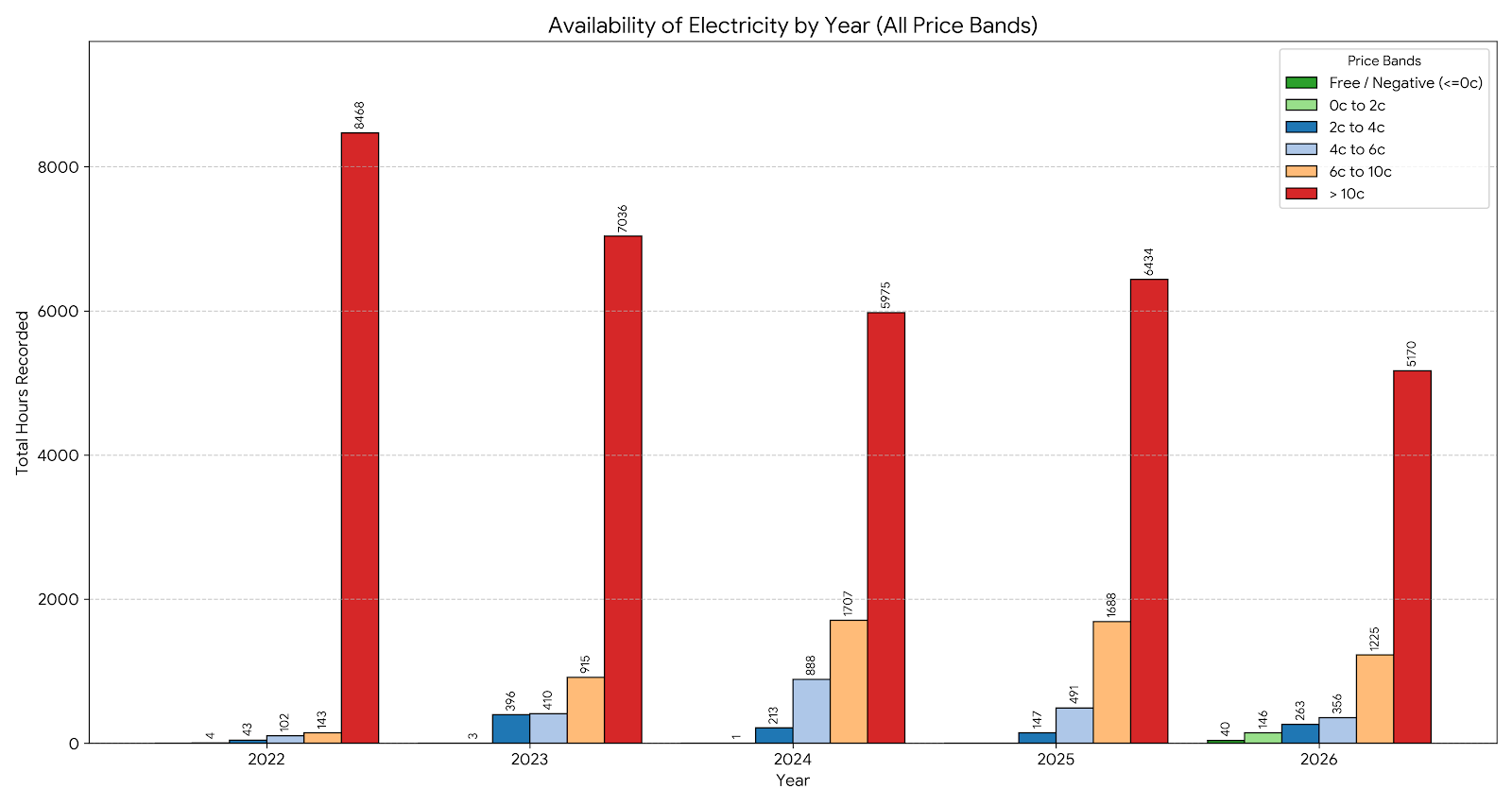
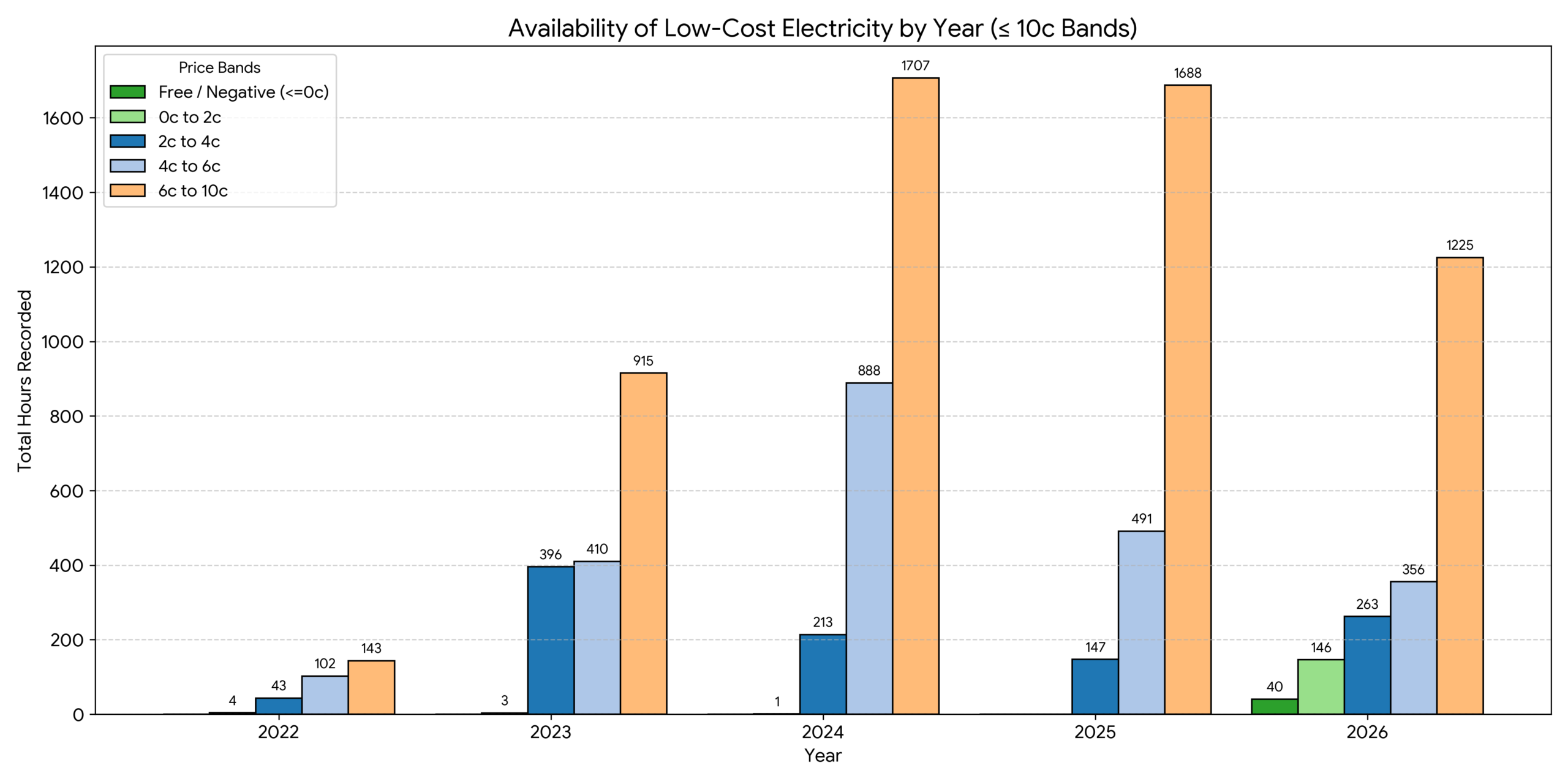
The idea is simple: buy electricity when it's cheap and use it when it's expensive. Instead of generating its own power, the battery acts like a smart storage tank. It charges from the grid during the midday slump when solar surplus makes electricity practically free. Then, during the expensive evening peak times, your house runs on the stored battery power instead of buying high-priced grid electricity.
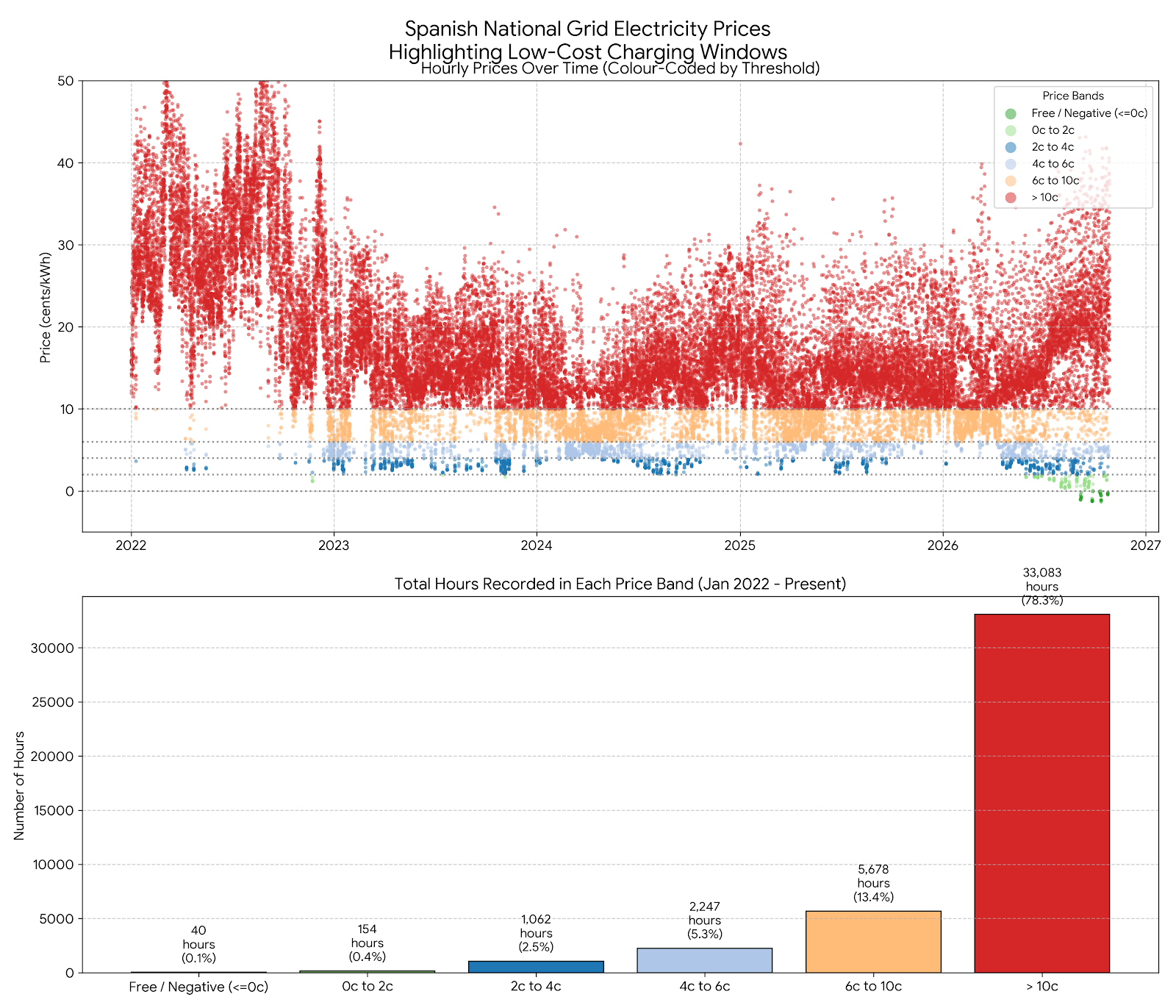
The Mechanics of Grid-to-Battery Arbitrage
To make this work smoothly, the system needs clever software to talk to the grid. A reliable setup using Victron equipment and smart home software (like Node-RED on a Cerbo GX) can automatically check tomorrow's electricity prices from the Spanish grid (Red Eléctrica). The system then tells the battery to charge only during the absolute cheapest hours, ensuring it is completely full before the expensive rates kick in.
Is It Really Viable? Let's Look at the Math
By avoiding evening peaks and capitalising on the midday slump, a well-calibrated system saves an average of €0.22 per unit of electricity. Here is how that plays out for heavier usage setups.
Scenario 1: High Consumption Household (40 kWh/day)
- Optimal Battery Size: 48.3 kWh (like three 16.1 kWh LiFePO4 racks).
- Grid Potencia Required: To push 40 kWh into the batteries during a 3 to 4-hour low-cost window, you need a sustained charge of 10.0 kW to 13.33 kW. A Victron MultiPlus-II 48/10000 on a heavy single-phase or standard three-phase connection handles this perfectly.
- The Return: Shifting 40 kWh saves you about €8.80 a day, which is €3,212 in annual savings. The system pays for itself in roughly 4 to 5 years, giving you over a decade of essentially free energy arbitrage after that.
Scenario 2: High Consumption (40 kWh) + Small EV (12 kWh/day)
- Optimal Battery Size: 48.3 kWh. (The house battery stays the same, the EV uses its own internal battery).
- Grid Potencia Required: Pulling a combined 52 kWh from the grid in a tight 3-hour window demands 17.33 kW. You'll need a heavy three-phase connection for this. Node-RED acts as the traffic cop, routing cheap grid power to both the house batteries and the car at the same time.
- The Return: Shifting 52 kWh saves €11.44 daily, translating to roughly €4,175 in annual savings. The system stops being just a backup and turns into an automated financial asset aggressively reducing the running costs of both the home and the vehicle.
You don't need a roof covered in PV panels to take advantage of the renewable energy transition. By deploying a smart battery system to exploit modern grid volatility, you secure predictable bills and energy independence, all while keeping the beautiful stone walls of traditional buildings completely untouched.