
Getting used to new ways of saving energy can feel like a big leap. While using a large home battery system without any solar panels might seem like a clever new trend, it actually isn't a new concept—in fact, we wrote an article on it several years ago. However, with the grid offering ever-increasing periods of free or very low-cost energy, this standalone battery strategy is becoming more viable than ever.
Installing solar panels simply is not possible for everyone. You might have too much shade, structural limits, or strict planning rules—especially on historic stone buildings. In these situations, a smart grid-tied battery offers a great way to cut your electricity bills without changing the outside of your property.
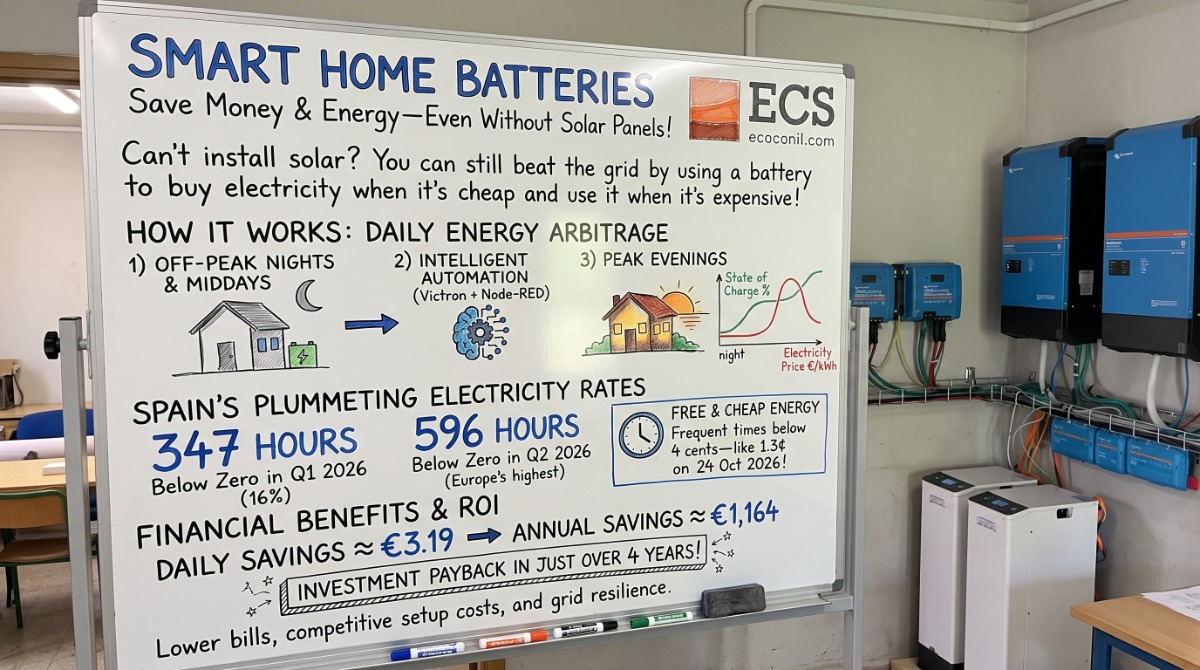
The idea is simple: buy electricity when it is cheap and use it when it is expensive. Instead of generating its own power, the battery acts like a smart storage tank. It charges from the grid late at night when electricity is abundant and cheap. Then, during the expensive evening peak times, your house runs on the stored battery power instead of buying high-priced grid electricity.
To make this work smoothly, the system needs clever software to talk to the grid. A reliable setup using Victron equipment and smart home software (like Node-RED) can automatically check tomorrow's electricity prices from the Spanish grid (Red Eléctrica). The system then tells the battery to charge only during the absolute cheapest hours, ensuring it is completely full before the expensive rates begin. There are an increasing number of these very cheap hours available to take advantage of; in the first quarter of 2026, the Spanish day-ahead electricity market saw prices drop below zero for 347 hours, which accounted for 16% of all trading hours during that period. Additionally, in the second quarter of 2026, Spain experienced 596 hours where electricity prices fell below zero, the highest in Europe. During these times, generators were actually paying to offload excess power. There are also numerous times throughout the day when the price drops below 4 cents; for example, on October 24, 2026, the price was 0.01314 €/kWh (just over 1.3 cents) from 14:00 to 15:00.
The financial benefits are very clear. A full setup with a large battery is now very competitive to install. By saving an average of €0.22 per unit of electricity, a single daily cycle saves about €3.19 on your bill. Over a full year, this adds up to €1,164 in savings. At this rate, the entire system pays for itself in just over four years, giving you lower bills and reliable backup power for years to come.